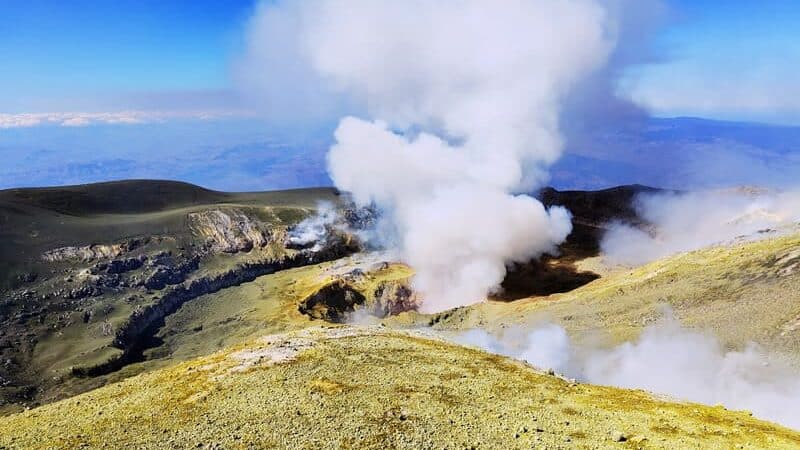
Etna Summit Craters Hike: Practical Volcanology Guide
What to check before a summit attempt: access, weather, gear, and effort.
Table of Contents
Summit route profile
Summit routes involve high altitude, steep volcanic terrain, and rapidly changing mountain conditions. Physical effort is significant, especially above 2900 meters where pace and weather tolerance matter more than distance alone.
Requirements and equipment
Participants should have solid fitness, suitable footwear, layered clothing, wind protection, water, and sun protection. Certified guiding is required in regulated summit areas and is critical for safe decision-making.
Conditions and route changes
Summit itineraries can be modified on the same day due to wind, visibility, volcanic activity, or civil protection restrictions. Always plan with flexible expectations and rely on final operational briefings from your guide team.
Effort management at altitude
Above 2800-3000 meters, pace control is more important than speed. Regular hydration, short recovery pauses, and wind protection materially improve performance and comfort. Summit-day outcomes depend on cumulative factors: previous-day fatigue, thermal range, terrain state, and route regulation updates. Prepare for variability rather than fixed expectations.
Equipment choice should prioritize stability and weather adaptability: layered clothing, shell protection, gloves, and reliable grip on volcanic terrain. Light but insufficient gear increases risk when conditions turn quickly.
Guide-led decision framework
Certified guides evaluate route feasibility through active observations, official constraints, and team condition. This can lead to itinerary adjustments without reducing the value of the day: geomorphology reading, active-zone interpretation, and high-altitude progression remain central even when lines are adapted. A successful summit experience is defined by safe execution and quality interpretation, not by a rigid altitude number.
Final planning notes
Before departure, verify local updates, weather exposure, and route suitability for your group. A guided approach remains the most reliable way to combine safety, learning value, and realistic timing on Mount Etna.
Before You Go: Quick Planning Checklist
- Check updated weather and volcanic activity conditions for your travel dates.
- Confirm meeting point, start time, and transfer duration.
- Book your tour with flexible options when possible.
- Read local safety guidance before excursions.